


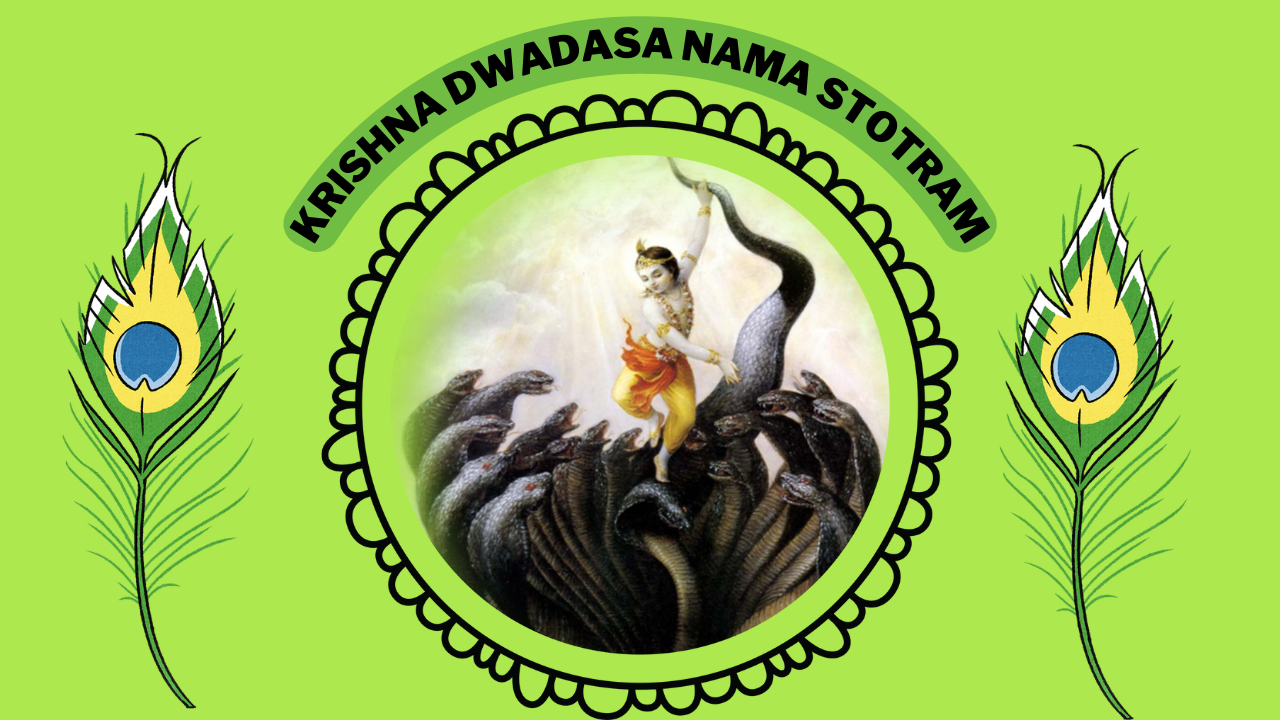
Krishna Dwadasa Nama Stotram
The Krishna Dwadasa Nama Stotram is a revered devotional hymn in Hinduism, dedicated to Lord Krishna, an incarnation of Lord Vishnu and one of the most beloved deities in the Hindu pantheon. This stotram, meaning “hymn of twelve names,” encapsulates twelve auspicious names of Lord Krishna, each reflecting a unique divine attribute or aspect of his eternal persona. Chanted with devotion, it is believed to bestow spiritual merit, cleanse sins, and bring divine blessings to the devotee.
Krishna Dwadasa Nama Stotram
Kim Te Naamasahasrena Vijnyaatena Tavaa’rjuna.
Taani Naamaani Vijnyaaya Narah’ Paapaih’ Pramuchyate.
Prathamam Tu Harim Vindyaad Dviteeyam Keshavam Tathaa.
Tri’teeyam Padmanaabham Cha Chaturtham Vaamanam Smaret.
Panchamam Vedagarbham Tu Shasht’ham Cha Madhusoodanam.
Saptamam Vaasudevam Cha Varaaham Chaa’sht’amam Tathaa.
Navamam Pund’areekaaksham Dashamam Tu Janaardanam.
Kri’shnamekaadasham Vindyaad Dvaadasham Shreedharam Tathaa.
Etaani Dvaadasha Naamaani Vishnuprokte Vidheeyate.
Saayam Praatah’ Pat’hennityam Tasya Punyaphalam Shri’nu.
Chaandraayanasahasraani Kanyaadaanashataani Cha.
Ashvamedhasahasraani Phalam Praapnotyasamshayah’.
Amaayaam Paurnamaasyaam Cha Dvaadashyaam Tu Visheshatah’.
Praatah’kaale Pat’hennityam Sarvapaapaih’ Pramuchyate.
Origins and Scriptural Context
The Krishna Dwadasa Nama Stotram is rooted in the rich tapestry of Hindu scriptures, with references to its origin found in texts like the Mahabharata, particularly in the Aranya Parva (Forest Book). According to tradition, the stotram was revealed by Lord Krishna himself to Arjuna, one of the Pandava brothers and a central figure in the Bhagavad Gita. Krishna is said to have imparted these twelve names as a concise yet powerful means to attain spiritual liberation and divine grace, stating that chanting these names is equivalent to reciting thousands of his names (Sahasranama). The hymn is also associated with other Vaishnava texts, where it is presented as a prayer to invoke Krishna’s blessings.
The stotram is sometimes linked to the city of Dwaraka, Krishna’s divine abode, and is believed to have been recited in the presence of Yashoda, Krishna’s foster mother, adding a layer of emotional and devotional depth to its narrative. Its simplicity and potency make it accessible to devotees across different levels of spiritual practice, from beginners to advanced practitioners.
Benefits of Chanting
The phala shruti of the Krishna Dwadasa Nama Stotram outlines numerous benefits, both spiritual and temporal, for those who chant it with faith and devotion. Some of these include:
- Spiritual Purification: Regular chanting is said to cleanse the devotee of sins (papa), including grave offenses, and liberate them from the cycle of birth and death.
- Merit Equivalent to Rituals: The stotram claims that chanting the twelve names yields the same merit as performing a thousand Chandrayana fasts, donating a daughter in marriage (kanya daan), or conducting a thousand Ashwamedha sacrifices—grand Vedic rituals reserved for kings and sages.
- Protection and Prosperity: Devotees are believed to receive Krishna’s protection from fears, obstacles, and adversities, along with blessings of prosperity and well-being.
- Mental Peace and Focus: The rhythmic recitation and meditation on Krishna’s names calm the mind, reduce stress, and enhance concentration.
- Fulfillment of Desires: As Janardana (the wish-fulfiller), Krishna is said to grant the righteous desires of devotees who chant with sincerity.
The stotram is particularly recommended for chanting during auspicious times, such as early morning (pratah kala), dusk, full moon days (Purnima), new moon days (Amavasya), and the twelfth day of the lunar cycle (Dwadashi). These times are believed to amplify the hymn’s efficacy.