


Narasimha Stotram
The Narasimha Stotram is a powerful and revered devotional hymn dedicated to Lord Narasimha, the fourth incarnation of Lord Vishnu in Hinduism. This sacred composition, rooted in ancient Vedic traditions, extols the divine qualities, fierce compassion, and protective prowess of Narasimha, the half-man, half-lion deity. The stotram is chanted by devotees to seek protection, dispel fears, and attain spiritual liberation.
Narasimha Stotram
bramovach
nato̕smyanantaay durantashaktaye vichitraviryay pavitrakarmane
vishvasya sargasthitisanyamangunaih svalilaya sandadhate̕vyayatmane 1
shrirudra uvach
kopakalo yugantaste hato̕yamasuro̕lpakah
tassutam pahyu pasritam bhaktam te bhaktavatsal 2
indra uvach
pratyanitah param bhavata trayata nah svabhaga daityakrantam hradayakamalam tvadgruham pratyabodhi
kalagrastam kiyadidamaho nath shushrushatam te muktistesham nahi bahumata narasinhaparaih kim 3
rishaya uchuh
tvam nastapah paramamatth yadatmatejo yenedamadipurushatmagatam sasarj
tadvipraluptamamunadya sharanyapal rakshagrihitavapusha punaranvamansthah 4
pitar uchuh
shraddhani no̕dhibubhuje prasabham tanujairdattani tirthasamaye̕pibattilambu
tasyodarannakhavidirnavapadya aarchhattasmai namo nruharaye̕khildharmagoptre 5
siddha uchuh
yo no gatim yogasiddhaamsadhuraharshidyogatapobalen
nanadarp tam nakhairnirdadar tasmai tubhyam pranatah smo nrusingh 6
vidyadhara uchuh
vidyam pruthagdharanaya̕nuraddham nyashedhadadhnyo balaviryadruptah
sa yen sankhye pashuvaddhatastam maayanrusinham pranatah sm nityam 7
naga uchuh
yen papen ratnani striratnani hratani nah
tadvakshahpatanenaasam dattanand namo̕stu te 8
manav uchuh
manavo vayam tav nideshakarino ditijen dev paribhutasetavah
bhavat khalah sa upasanhratah prabho karavaam te kimanushaadhi kinkaran 9
prajapataya uchuh
prajesha vayam te pareshabhisrishta na yen praja vai srijamo nishiddhah
sa esh tvaya bhinnavaksha nu shete jaganmangalam sattvamurte̕vatarah 10
gandharva uchuh
vayam vibho te natnatyagayaka yenatmasadviryabalaujasa krutah
sa esha nito bhavata dashaamimam kimutpathasthah kushalay kalpate 11
charana uchuh
hare tavanghripadakajam bhavapavargamaashritah
yadesh sadhuhracchhayastvaya̕surah samaapitah 12
yaksha uchuh
vayamanucharamukhyah karmabhiste manodhnyaist iha ditisuten prapita vahakatvam
sa tu janaparitapam takrutam janata te narahar upanitah panchatam panchavimsh 13
kimpurusha uchuh
vayam kimpurushastvam tu mahapurush ishvarah
ayam kupurusho nashto dhikkrutah sadhubhiryada 14
vaitalika uchuh
sabhasu satreshu tavaamalam yasho gitva saparyam mahatim labhamahe
yastam vyanaishid bhrushamesh durjano dishtya hataste bhagavanyathamahah 15
kinnara uchuh
vayamish kinnar ganaastavanuga ditijen vishtimamuna̕nukaritah
bhavata hare savrijino̕vasadito narasingh nath vibhavay no bhav 16
vishnuparshada uchuh
advaitaddharinararupmadbhutam te drushtam nah sharanad sarvalokasharm
so̕yam te vidhikar ish viprashaptastasyedam nidhanamanugrahay vidmah 17
iti shrimadbhagavatangargatam nrusinhastotram sampurnam
Origins of Narasimha Stotram
The Narasimha Stotram draws inspiration from the Puranic accounts of Lord Narasimha, particularly the story found in the Srimad Bhagavatam and other sacred texts like the Vishnu Purana. Narasimha is celebrated as the divine protector who incarnated to save his ardent devotee, Prahlada, from the tyranny of the demon king Hiranyakashipu.
Hiranyakashipu had received a boon from Lord Brahma that made him nearly invincible he could not be killed by man or beast, during day or night, inside or outside, on land or in the sky, or by any weapon. Emboldened by this boon, he unleashed terror and demanded worship as a god. However, his son Prahlada remained steadfast in his devotion to Vishnu, defying his father’s decrees. Enraged by Prahlada’s unwavering faith, Hiranyakashipu attempted to kill him multiple times, only to be thwarted by divine intervention.
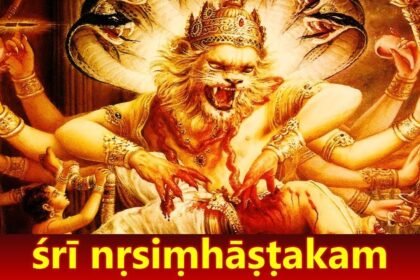
To fulfill Brahma’s boon while protecting Prahlada, Vishnu manifested as Narasimha neither fully man nor beast with the body of a man and the head of a lion. Narasimha appeared at twilight (neither day nor night), dragged Hiranyakashipu to the threshold of his palace (neither inside nor outside), placed him on his lap (neither on land nor in the sky), and tore him apart with his claws (without using a weapon). This extraordinary manifestation underscores Narasimha’s role as the destroyer of evil and the protector of the righteous.
The Narasimha Stotram, believed to be composed by ancient sages or devotees inspired by this divine act, encapsulates the essence of Narasimha’s glory. While various versions of the stotram exist, some attributed to saints like Adi Shankaracharya or found in texts like the Narasimha Purana, the hymn’s core purpose remains consistent: to invoke Narasimha’s blessings for courage, protection, and spiritual awakening.
How to Chant the Narasimha Stotram
Devotees typically chant the Narasimha Stotram with reverence and focus, adhering to traditional guidelines to maximize its efficacy:
- Time and Place: The stotram is ideally chanted during twilight (dawn or dusk), as Narasimha appeared at this sacred juncture. A clean, quiet space, preferably in front of an image or idol of Narasimha, enhances the experience.
- Preparation: Devotees should bathe and wear clean clothes. Lighting a lamp and offering flowers or incense to Narasimha creates a conducive atmosphere.
- Pronunciation: Correct pronunciation of Sanskrit verses is important, as the vibrations of the words carry spiritual potency. Beginners can learn from authentic recordings or under the guidance of a guru.
- Regular Practice: Chanting the stotram daily, especially on Saturdays or during Narasimha Jayanti (the deity’s appearance day), deepens its impact.
- Intention: The stotram should be recited with sincerity, faith, and a heart full of devotion, focusing on Narasimha’s divine form and qualities.