


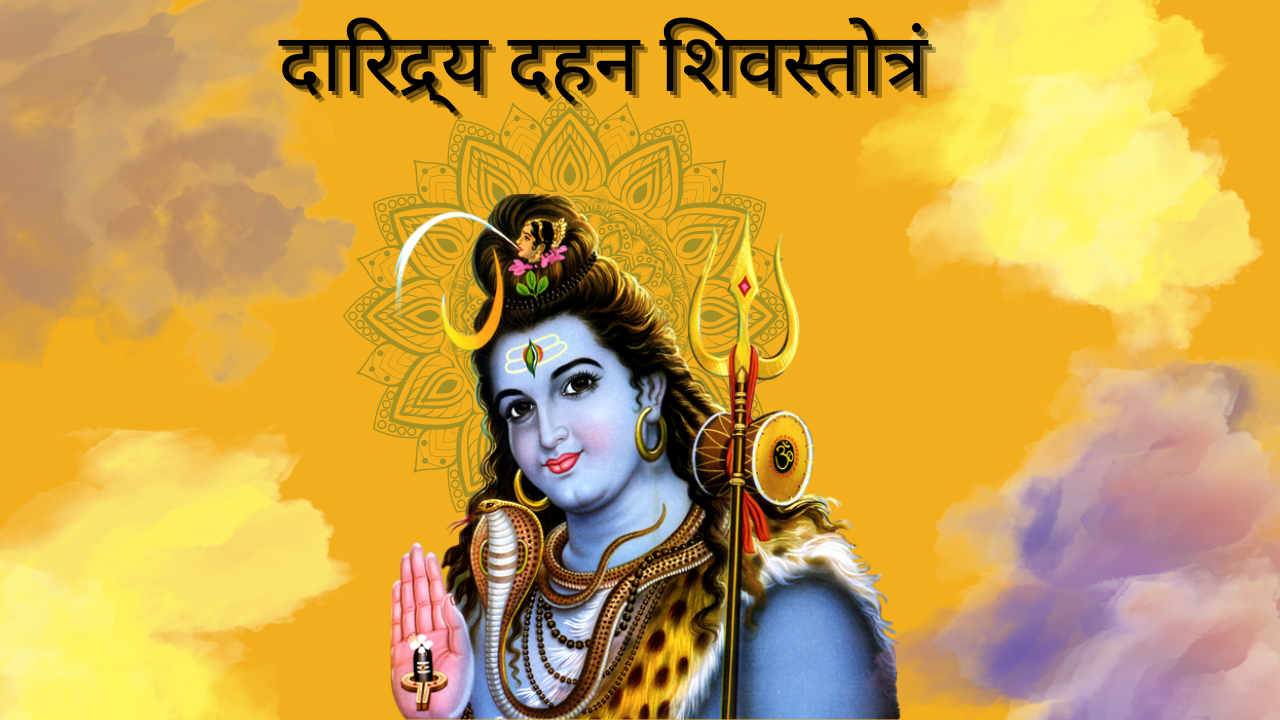
Daridraya Dahana Shiv Stotram
The Daridraya Dahana Shiv Stotram is a revered Sanskrit hymn dedicated to Lord Shiva, one of the principal deities in Hinduism, known as the destroyer of evil and the granter of boons. Composed by the ancient sage Vasishta, this powerful stotram (devotional hymn) is believed to alleviate poverty, sorrow, and suffering while bestowing wealth, health, and spiritual liberation upon its devotees. The name “Daridraya Dahana” translates to “the burning of poverty,” symbolizing Shiva’s divine ability to eradicate material and spiritual destitution.
The Daridraya Dahana Shiva Stotram is attributed to Sage Vasishta, one of the seven great sages (Saptarishis) in Vedic tradition and a prominent figure in Hindu scriptures like the Ramayana and Mahabharata. Vasishta was a Brahma Rishi, renowned for his wisdom, spiritual mastery, and devotion to Lord Shiva. According to tradition, he composed this hymn to invoke Shiva’s blessings for devotees facing financial hardship, illness, or existential struggles. The stotram is rooted in the Shaivite tradition, which venerates Shiva as the supreme deity capable of transforming lives through his grace.
The hymn is part of a larger body of Shiva stotras (hymns) found in texts like the Shiva Stotra Nidhi and other devotional compilations. Its authenticity is upheld by its inclusion in Sanskrit scriptures and its widespread recitation across India, particularly during auspicious occasions like Maha Shivaratri and the month of Shravan.
Daridraya Dahana Shiv Stotram
Vishveshvaraya Narakarnava Taranaya
Karnamrutaya Shashishekhara Dharanaya.
Karpurakantidhavalaya Jatadharaya
Daridrya Duhkhadahanaya Namah Shivaya ॥1॥
Gauripriyaya Rajanishakaladharaya
Kalantakaya Bhujagadhipankanaya.
Gangadharaya Gajarajavimardanaya
Daridrya Dukhadahanaya Namah Shivaya॥2॥
Bhaktipriyaya Bhavarogabhayapahaya
Ugraya Durgabhavasagarataranaya.
Jyotirmayaya Gunanamasunutyakaya
Daridrya Duhkha Dahanaya Namah Shivaya॥3॥
Charmambaraya Shavabhasmavilepanaya
Bhalekshanaya Manikundala Manditaya.
Manjirapadayugalaya Jatadharaya
Daridrya Duhka Dahanaya Namah Shivaya॥4॥
Panchananaya Phaniraja Vibhushanaya
Hemamshukaya Bhuvanatrayamanditaya.
Anandabhumivaradaya Tamomayaya
Daridrya Duhka Dahanaya Namah Shivaya॥5॥
Bhanupriyaya Bhavasagarataranaya
Kalantakaya Kamalasanapujitaya.
Netratrayaya Shubhalakshana Lakshitaya
Daridrya Duhka Dahanaya Namah Shivaya॥6॥
Ramapriyaya Raghunathavarapradaya
Nagapriyaya Narakarnavataranaya.
Punyeshu Punyabharitaya Surarchitaya
Daridrya Duhka Dahanaya Namah Shivaya॥7॥
Mukteshwaraya Phaladaya Ganeshwaraya
Gitapriyaya Vrushabheshwara Vahanaya.
Matangacharmavasanaya Maheshwaraya
Daridrya Duhka Dahanaya Namah Shivaya॥8॥
Structure and Composition of Daridra Dahan Shiva Stotram
The Daridraya Dahana Shiva Stotram consists of eight main verses (shlokas) followed by a phalasruti . Each verse is a poetic salutation to Lord Shiva, praising his divine attributes, forms, and powers. The stotram is written in classical Sanskrit and follows a lyrical meter, making it suitable for chanting and meditation.
Each verse ends with the refrain “Daridrya Duhkha Dahanaya Namah Shivaya”, which translates to “I salute Shiva, who burns the sorrow of poverty.” This repetitive invocation reinforces the hymn’s central theme: Shiva’s ability to destroy material and spiritual afflictions. The language is rich with metaphors, drawing from Shiva’s iconography such as his matted hair, third eye, and association with the Ganga and his mythological feats, like slaying demons and granting boons to devotees.
Phalasruti The Fruits of Recitation
The concluding verse, attributed to Vasishta, outlines the benefits of chanting the stotram:
- Removal of Diseases: It cures all ailments, both physical and mental.
- Wealth and Prosperity: It attracts abundance and destroys poverty.
- Family Growth: It blesses devotees with children and grandchildren.
- Spiritual Elevation: Reciting the stotram three times daily (at dawn, noon, and dusk) grants heavenly pleasures and liberation (moksha).
Benefits of Chanting Daridra Dahan Shiva Stotram
The Daridraya Dahana Shiva Stotram is widely regarded as a potent spiritual tool for overcoming adversity. Devotees believe that regular recitation, performed with faith and devotion, yields the following benefits:
- Financial Stability: The stotram is especially recommended for those facing economic hardships, debts, or unemployment. It is believed to attract wealth and opportunities.
- Mental Peace: Chanting helps alleviate anxiety, fear, and emotional turmoil, fostering inner calm and resilience.
- Health and Healing: The hymn is said to cure physical ailments and promote overall well-being.
- Spiritual Growth: It deepens one’s connection to Shiva, aiding in meditation and self-realization.
- Protection from Obstacles: Shiva’s grace shields devotees from negative influences and life’s challenges.
For optimal results, tradition suggests chanting the stotram during trishandhya (the three junctures of the day: sunrise, noon, and sunset) or during Shiva-specific festivals like Maha Shivaratri. Many devotees accompany recitation with rituals like offering bilva leaves, milk, or water to a Shiva lingam
How to Chant the Stotram
For those new to the Daridraya Dahana Shiva Stotram, here are some practical guidelines:
- Learn the Pronunciation: Use audio recordings or guidance from a priest to master the Sanskrit pronunciation. Accurate chanting enhances the hymn’s efficacy.
- Set a Sacred Space: Chant in a clean, quiet area, preferably before a Shiva lingam or image. Light a lamp or incense to create a meditative atmosphere.
- Follow a Routine: Recite the stotram daily, ideally during sunrise, noon, or sunset. Consistency amplifies its benefits.
- Understand the Meaning: Reflect on the English translation to internalize Shiva’s qualities, deepening your devotion.
- Combine with Rituals: Offer water, milk, or bilva leaves to Shiva while chanting, as these are sacred to him.