



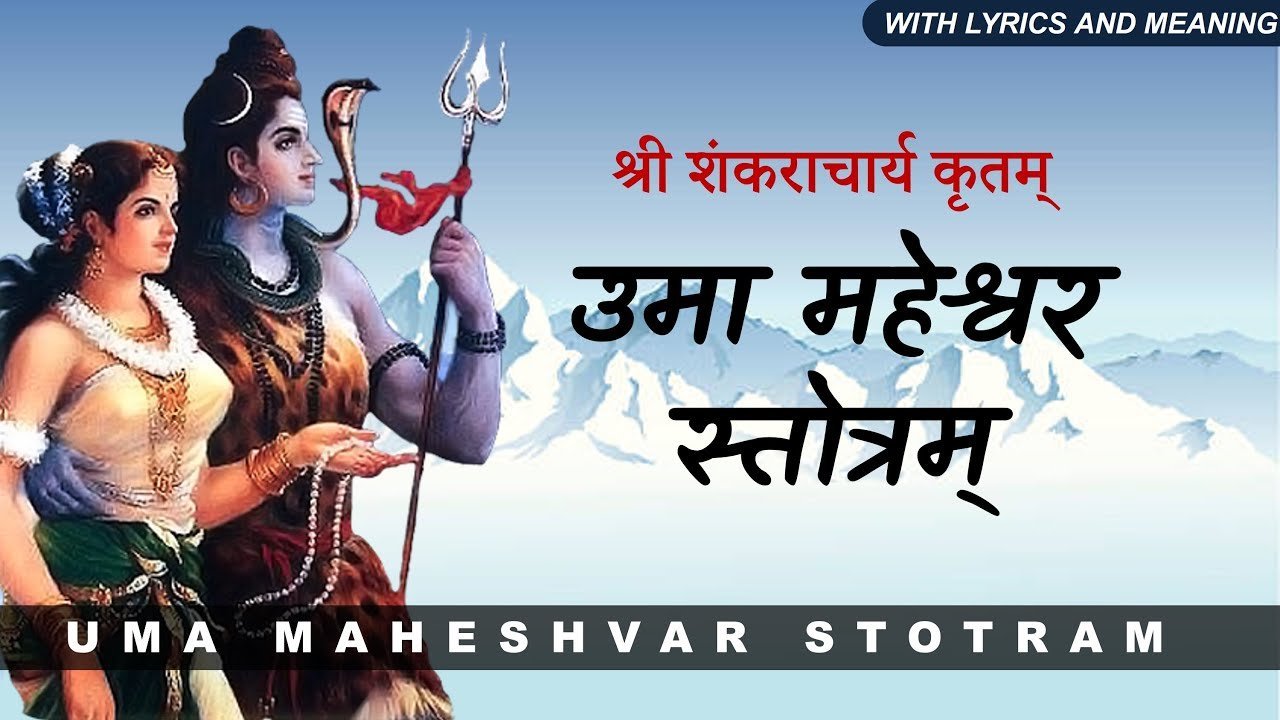
Uma Maheshwara Stotram
The Uma Maheshwara Stotram is a revered Sanskrit hymn dedicated to Lord Shiva and Goddess Parvati, collectively known as Umamaheshwara, symbolizing the divine union of masculine and feminine energies. Composed by the illustrious philosopher and spiritual leader Adi Shankaracharya, this stotram holds a significant place in Hindu devotional literature. It is a poetic expression of reverence, devotion, and spiritual aspiration, extolling the divine qualities of Shiva and Parvati as the cosmic parents who govern creation, preservation, and dissolution.
The Umamaheshwara Stotram is attributed to Adi Shankaracharya, an 8th-century Indian philosopher who consolidated the doctrine of Advaita Vedanta, a non-dualistic school of Hindu philosophy. Shankaracharya’s contributions to Hinduism are vast, including numerous stotras (hymns) dedicated to various deities. His works are known for their poetic brilliance, philosophical depth, and devotional fervor. The Umamaheshwara Stotram is one such composition, crafted to honor the divine couple Uma (Parvati) and Maheshwara (Shiva) who represent the inseparable unity of Shakti (divine energy) and Shiva (divine consciousness).
While precise historical records about the composition’s context are scarce, it is believed that Shankaracharya composed this hymn during his travels across India, possibly inspired by his visits to sacred sites like Kailasa or other Shiva-Parvati temples. The stotram reflects his profound understanding of Vedic scriptures and his ability to encapsulate complex spiritual truths in accessible, devotional verses.
Uma Maheswara Stotram
namaḥ śivābhyāṃ navayauvanābhyāṃ
parasparāśliṣṭavapurdharābhyām ।
nagēndrakanyāvṛṣakētanābhyāṃ
namō namaḥ śaṅkarapārvatībhyām ॥ 1 ॥
namaḥ śivābhyāṃ sarasōtsavābhyāṃ
namaskṛtābhīṣṭavarapradābhyām ।
nārāyaṇēnārchitapādukābhyāṃ
namō namaḥ śaṅkarapārvatībhyām ॥ 2 ॥
namaḥ śivābhyāṃ vṛṣavāhanābhyāṃ
viriñchiviṣṇvindrasupūjitābhyām ।
vibhūtipāṭīravilēpanābhyāṃ
namō namaḥ śaṅkarapārvatībhyām ॥ 3 ॥
namaḥ śivābhyāṃ jagadīśvarābhyāṃ
jagatpatibhyāṃ jayavigrahābhyām ।
jambhārimukhyairabhivanditābhyāṃ
namō namaḥ śaṅkarapārvatībhyām ॥ 4 ॥
namaḥ śivābhyāṃ paramauṣadhābhyāṃ
pañchākṣarīpañjararañjitābhyām ।
prapañchasṛṣṭisthitisaṃhṛtābhyāṃ
namō namaḥ śaṅkarapārvatībhyām ॥ 5 ॥
namaḥ śivābhyāmatisundarābhyāṃ
atyantamāsaktahṛdambujābhyām ।
aśēṣalōkaikahitaṅkarābhyāṃ
namō namaḥ śaṅkarapārvatībhyām ॥ 6 ॥
namaḥ śivābhyāṃ kalināśanābhyāṃ
kaṅkāḻakalyāṇavapurdharābhyām ।
kailāsaśailasthitadēvatābhyāṃ
namō namaḥ śaṅkarapārvatībhyām ॥ 7 ॥
namaḥ śivābhyāmaśubhāpahābhyāṃ
aśēṣalōkaikaviśēṣitābhyām ।
akuṇṭhitābhyāṃ smṛtisambhṛtābhyāṃ
namō namaḥ śaṅkarapārvatībhyām ॥ 8 ॥
namaḥ śivābhyāṃ rathavāhanābhyāṃ
ravīnduvaiśvānaralōchanābhyām ।
rākāśaśāṅkābhamukhāmbujābhyāṃ
namō namaḥ śaṅkarapārvatībhyām ॥ 9 ॥
namaḥ śivābhyāṃ jaṭilandharābhyāṃ
jarāmṛtibhyāṃ cha vivarjitābhyām ।
janārdanābjōdbhavapūjitābhyāṃ
namō namaḥ śaṅkarapārvatībhyām ॥ 10 ॥
namaḥ śivābhyāṃ viṣamēkṣaṇābhyāṃ
bilvachChadāmallikadāmabhṛdbhyām ।
śōbhāvatīśāntavatīśvarābhyāṃ
namō namaḥ śaṅkarapārvatībhyām ॥ 11 ॥
namaḥ śivābhyāṃ paśupālakābhyāṃ
jagatrayīrakṣaṇabaddhahṛdbhyām ।
samastadēvāsurapūjitābhyāṃ
namō namaḥ śaṅkarapārvatībhyām ॥ 12 ॥
stōtraṃ trisandhyaṃ śivapārvatībhyāṃ
bhaktyā paṭhēddvādaśakaṃ narō yaḥ ।
sa sarvasaubhāgyaphalāni
bhuṅktē śatāyurāntē śivalōkamēti ॥ 13 ॥
How to Chant the Stotram
For optimal benefits, devotees are advised to follow these guidelines when chanting the Umamaheshwara Stotram:
- Preparation: Bathe and wear clean clothes. Sit in a quiet, clean space, preferably facing a Shiva-Parvati idol or image.
- Timing: Chant during the three sandhyas (dawn, noon, dusk) or early morning for maximum spiritual impact.
- Pronunciation: Learn the correct Sanskrit pronunciation, using transliterations or audio guides if needed. Chanting with devotion is more important than perfection.
- Mindset: Approach the recitation with faith, humility, and focus, visualizing Shiva and Parvati’s divine forms.
- Offerings: Optionally, offer flowers, incense, or a lamp to enhance the devotional atmosphere.

