



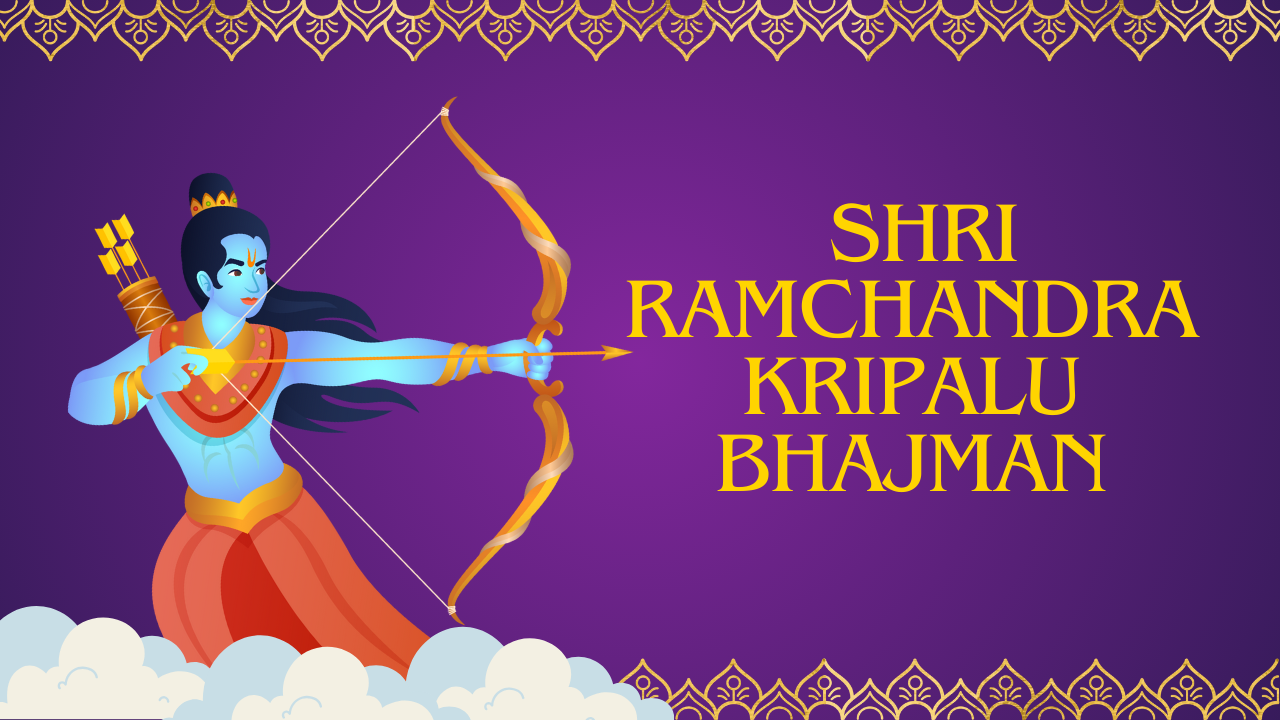
Shri Ram Chandra Kripalu Bhajman
The hymn Shri Ram Chandra Kripalu Bhajman, often referred to as Shri Ram Stuti, is one of the most cherished devotional compositions in the Hindu tradition. Penned by the revered poet-saint Goswami Tulsidas in the 16th century, this stuti (horation ode) is a heartfelt expression of devotion to Lord Rama, the seventh avatar of Lord Vishnu. Included in Tulsidas’ work Vinaya Patrika, the hymn glorifies Rama’s divine qualities, compassion, and valor, inviting devotees to immerse themselves in his worship. Written in a blend of Sanskrit and Awadhi, Shri Ram Chandra Kripalu Bhajman is both a poetic masterpiece and a spiritual guide, resonating with millions of devotees across centuries.
Shri Ram Chandra Kripalu Bhajman
Shri Rama Chandra Kripalu Bhajuman,Haran Bhavbhay Darunam।
Nav Kanj Lochan, kanj Mukh KarKanj Pad Kanjarunam॥
Shri Rama Chandra Kripalu Bhajuman…॥
Kandarp Aganit Amit Chhavi,Nav Neel Neerad Sundaram।
Pat Peet Maanahu Tadit Ruchi-ShuchiNaumi Janak Sutavaram॥
Shri Rama Chandra Kripalu Bhajuman…॥
Bhaju Deenbandhu DineshDanav Daitya Vansh Nikandanam।
Raghunand Anand Kand KaushalChandra Dasharath Nandanam॥
Shri Rama Chandra Kripalu Bhajuman…॥
Shir Mukut Kundal TilakCharu Udar Ang Vibhushanam।
Ajanubhuj Shar Chap-DharSangram Jit Khardushnam॥
Shri Rama Chandra Kripalu Bhajuman…॥
Iti Vadati Tulsidas,Shankar Shesh Muni Man Ranjanam।
Mam Hriday Kanj Nivas Kuru,Kaamadi Khal Dal Ganjanam॥
Shri Rama Chandra Kripalu Bhajuman…॥
Man Jahi Raacheu MilahiSo Var Sahaj Sundar Sanvaro।
Karuna Nidhaan SujaanSheel Saneh Janat Ravro॥
Shri Rama Chandra Kripalu Bhajuman…॥
Aehi Bhanti Gauri AsisSun Siy Hit Hiy Hiy Harshit Ali।
Tulsi Bhavanihi Poojee Puni PuniMudit Man Mandir Chali॥
Shri Rama Chandra Kripalu Bhajuman…॥
Historical and Literary Context
Goswami Tulsidas (1532–1623) is one of the most influential figures in Indian literature and spirituality, best known for his epic Ramcharitmanas, a retelling of the Ramayana in Awadhi. His works reflect a deep devotion to Lord Rama and a mission to make spiritual teachings accessible to the masses. Vinaya Patrika, where Shri Ram Chandra Kripalu Bhajman appears, is a collection of devotional hymns and prayers that express humility, surrender, and love for the divine.
The hymn was composed during a time of social and religious flux in northern India, under Mughal rule. Tulsidas sought to revive devotion to Rama as a symbol of dharma (righteousness) and compassion, countering spiritual disillusionment with a message of hope and divine grace. The choice of Awadhi, a vernacular language, blended with Sanskrit’s classical richness, made the hymn accessible yet profound, appealing to both the learned and the common devotee.
Spiritual and Cultural Significance
Shri Ram Chandra Kripalu Bhajman holds a central place in Hindu devotional practices, particularly during festivals like Ram Navami, Vijayadashami, and Hanuman Jayanti. Its recitation is believed to invoke Rama’s blessings, dispel fears, and purify the mind. The hymn’s emphasis on Rama as both transcendent and accessible makes it a bridge between the divine and the human, encouraging devotees to cultivate virtues like compassion, humility, and courage.
The hymn also underscores the bhakti (devotional) movement’s core tenet: surrender to God through love and contemplation. Tulsidas’ portrayal of Rama as deenabandhu (friend of the poor) resonates with the marginalized, reinforcing the idea that divine grace is universal. Its widespread use in aartis, bhajans, and personal prayers reflects its adaptability across contexts, from grand temple rituals to intimate home worship.