


Nachiketa Story
The story of Nachiketa is one of the most inspirational tales in Indian Historial Story, deeply rooted in the philosophical and spiritual traditions of Hinduism. It highlights themes of curiosity, perseverance, and the quest for truth about life, death, and the human soul. This article will explore Nachiketa’s journey, his legendary encounter with Yama, the god of death, and the profound lessons that emerged from their discourse.
- Nachiketa Story
- Origins of the Nachiketa Story
- Importance of Nachiketa in Indian Mythology
- The Legend of Nachiketa
- Journey to Meet Yama, the God of Death
- Nachiketa’s Encounter with Yama
- The Three Boons
- First Boon: Peace for His Father
- Second Boon: Knowledge of Sacred Fire
- Third Boon: The Secret of Life and Death
- Nachiketa’s Quest for Knowledge
- Key Teachings of the Nachiketa Story
- Moral and Ethical Lessons
- Nachiketa in the Katha Upanishad
- The Philosophy of Death
Origins of the Nachiketa Story
The story of Nachiketa is most famously
captured in the Katha Upanishad, one of the oldest spiritual texts in Hindu philosophy. The Upanishads are ancient Indian scriptures that delve into the nature of reality, the self, and the universe. Nachiketa’s tale serves as a metaphorical representation of the eternal search for knowledge and truth. This story is believed to have originated around 600 BCE, during a period of intense philosophical inquiry in India.
Importance of Nachiketa in Indian Mythology
Nachiketa is regarded as a symbol of youthful inquisitiveness and determination. His fearless pursuit of understanding life’s deepest truths earned him a special place in Indian Hisotry. By challenging Yama, the god of death, Nachiketa gained wisdom that continues to inspire generations. His story teaches the importance of seeking answers to life’s big questions, even when faced with seemingly insurmountable challenges.
The Legend of Nachiketa
The story begins with a young Nachiketa, the son of a sage named Vājashravasa. During a sacrificial ritual, Vājashravasa gave away his possessions, but Nachiketa noticed that his father was offering only old and useless cows. Concerned about the righteousness of the act, Nachiketa questioned his father, asking to whom he would be given. Angered by his son’s persistence, Vājashravasa, in a fit of rage, responded by saying, “I give you to Yama, the god of death.”
Journey to Meet Yama, the God of Death
Taking his father’s words seriously, Nachiketa embarked on a journey to the realm of Yama. Upon reaching Yama’s abode, he found that the god of death was not present. Nachiketa waited patiently for three days without food or water, displaying remarkable determination. When Yama returned, he was deeply moved by the boy’s endurance and offered him three boons as compensation for the wait.
Nachiketa’s Encounter with Yama
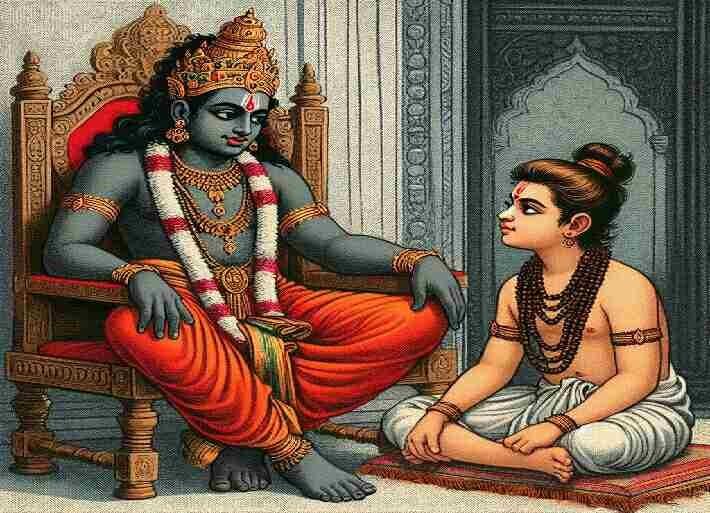
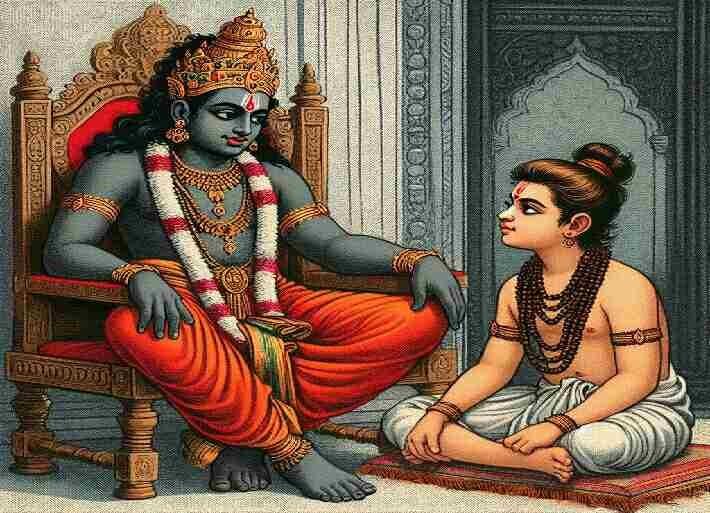
Despite being a powerful deity, Yama initially hesitated to meet Nachiketa, thinking he was too young to understand the profound knowledge he sought. However, Nachiketa’s persistence and sincerity convinced Yama to engage in a conversation.
Nachiketa’s refusal to leave without gaining the answers he sought became a defining moment in his journey. It is a testament to his strong will and unwavering desire to understand the mysteries of life and death. Yama eventually recognized that this young seeker was worthy of his wisdom.
Yama, pleased with Nachiketa’s patience and devotion, granted him three boons. Each of these boons had deep spiritual significance, reflecting Nachiketa’s wisdom and selflessness.
The Three Boons
First Boon: Peace for His Father
For his first boon, Nachiketa asked for peace and forgiveness for his father. He wished that upon his return, his father would not be angry with him and that their relationship would be restored. This request demonstrated Nachiketa’s love and respect for his family, even after the conflict with his father.
Second Boon: Knowledge of Sacred Fire
For his second boon, Nachiketa requested knowledge of the sacred fire, a ritual that would lead to spiritual enlightenment and immortality. Yama granted this wish and taught Nachiketa the proper methods of performing the sacred fire ritual, which would ensure a place in heaven for those who performed it correctly.
Third Boon: The Secret of Life and Death
The third boon was the most profound. Nachiketa asked Yama to reveal the secret of life and death, seeking to understand the nature of the soul and what happens after death. Yama initially hesitated, offering Nachiketa material riches and pleasures in exchange for choosing a different boon. However, Nachiketa remained firm, insisting on learning the ultimate truth.
Nachiketa’s Quest for Knowledge
The Spiritual Significance of His Questions
Nachiketa’s questions were not just about life and death; they were about understanding the nature of existence itself. His quest symbolized the human desire to know the eternal and unchanging truth that lies beyond the physical world.
Lessons from Yama About Life, Death, and the Soul
Yama’s teachings to Nachiketa revolved around the immortality of the soul and the transient nature of physical life. He explained that while the body may perish, the soul is eternal, unchanging, and indestructible. This profound lesson forms the core of Hindu beliefs about reincarnation and liberation (moksha).
Key Teachings of the Nachiketa Story
One of the central teachings of the Nachiketa story is the impermanence of the material world. Material wealth, pleasures, and even the body itself are temporary. True wisdom lies in recognizing this and focusing on spiritual growth.
Yama emphasized the importance of self-realization—the understanding of one’s true nature beyond the physical and material world. This pursuit of knowledge and truth is what ultimately leads to liberation from the cycle of birth and death.
Moral and Ethical Lessons
Nachiketa’s story is a lesson in faith, patience, and perseverance. His unwavering faith in his quest for knowledge and his patience in waiting for Yama illustrate the qualities necessary for spiritual growth.
Nachiketa is often regarded as the ideal seeker of truth. His fearless approach to asking difficult questions, his patience, and his ultimate rejection of material rewards in favor of spiritual knowledge make him a model for those on the path of self-discovery.
Nachiketa in the Katha Upanishad
The Katha Upanishad is one of the most well-known and revered Upanishads in Hindu philosophy. It is a dialogue between Nachiketa and Yama, and through their conversation, the text explores profound concepts about the self, the soul, and the afterlife.
Nachiketa’s story is the central narrative in the Katha Upanishad. His journey, questions, and the wisdom imparted by Yama form the foundation of the teachings in this sacred text.
The Philosophy of Death
Yama’s teachings about death emphasize that it is not something to be feared but understood as a natural part of existence. Death is simply the transition of the soul from one body to the next, as the soul is eternal.
In Hindu philosophy, the afterlife is seen as a continuation of the soul’s journey towards liberation. The teachings from Nachiketa’s story highlight the importance of living a righteous life and seeking spiritual knowledge to break free from the cycle of birth and death.